
Gelco Chimney Sweep in Taylorsville: A Homeowner’s Guide
Most homeowners pay for a sweep and get a verbal “looks good” on the way out the door. That’s a thin return on the money. Gelco cleaning and camera systems collect actual data about the inside of your flue, and that data should be walked through with you item by item, not summarized in the driveway. This guide explains what Gelco equipment really does inside a chimney in Taylorsville, and what to ask so you can judge the report instead of just accepting it. If you’d rather have a trained technician handle it, call (833) 513-8777.
What does a Gelco rotary system actually do differently?
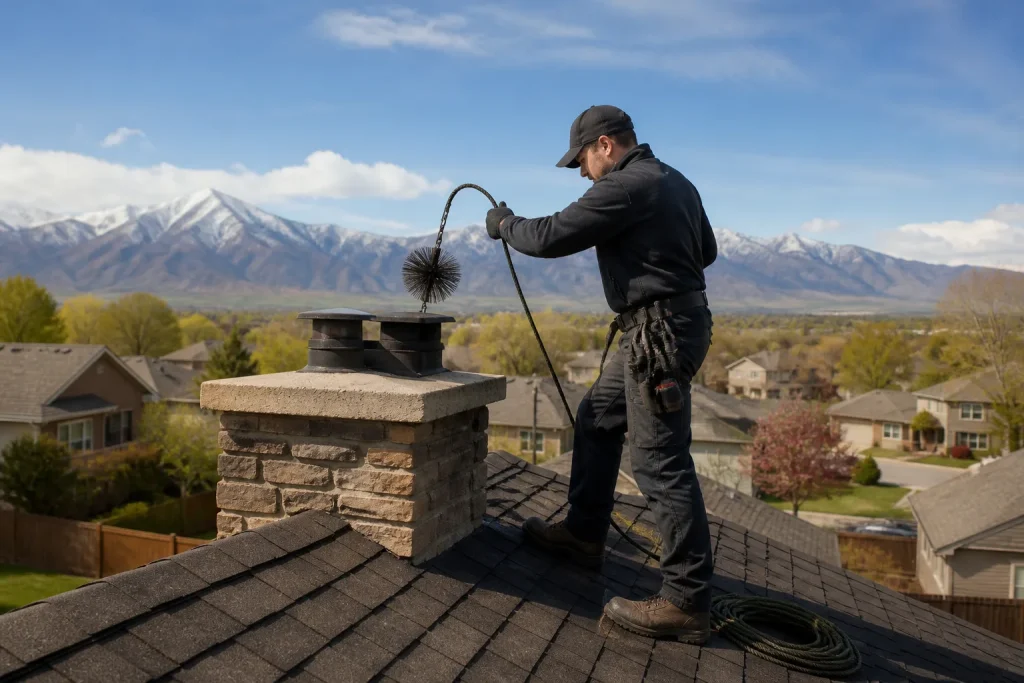
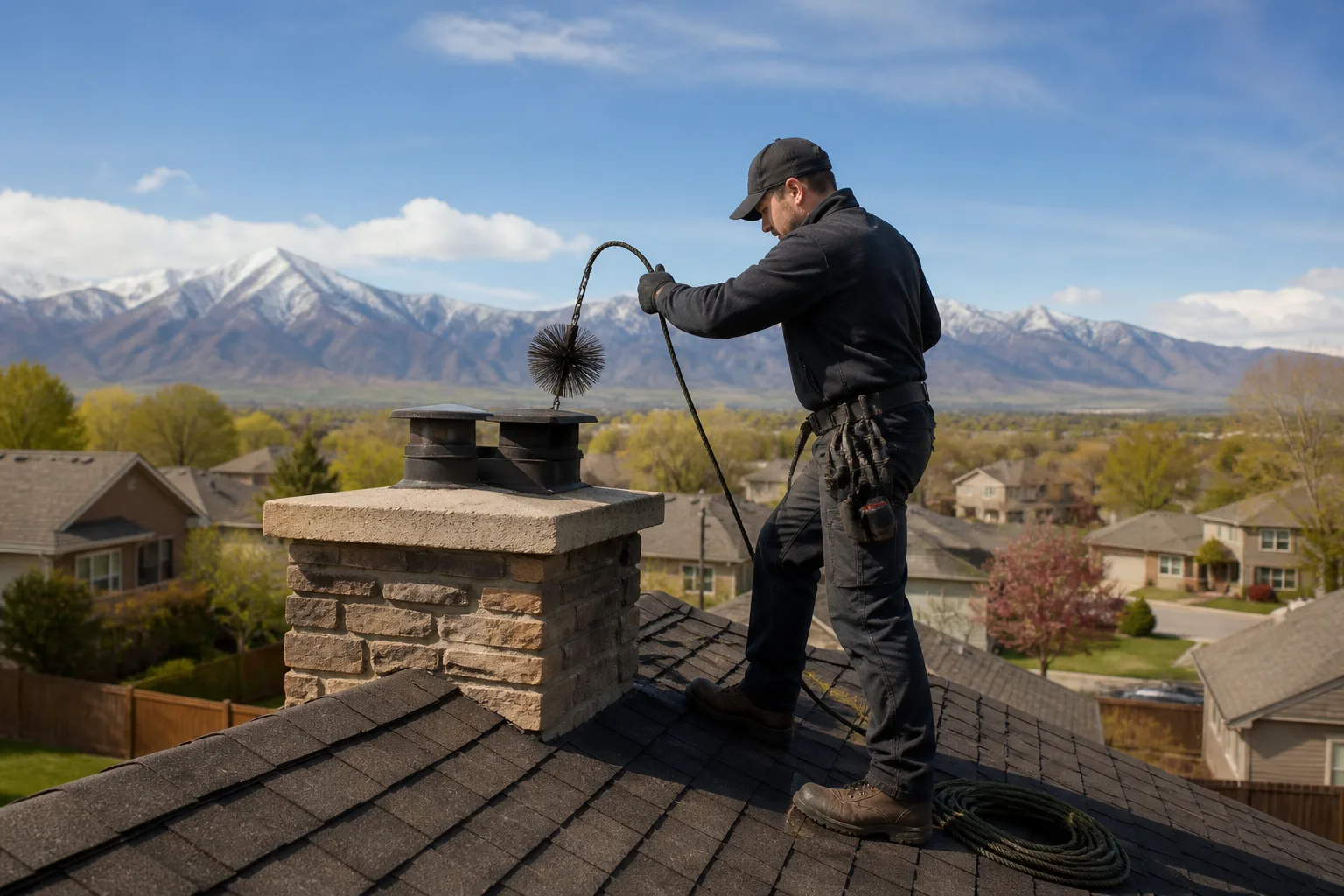
A Gelco rotary system spins a purpose-built whip or chain head through the flue at controlled speed, rather than dragging a stiff brush by hand. That difference matters most on heavy creosote. A hand brush glazes the surface of hard, tar-like creosote and skips over it. A rotary head cuts into it and brings the glaze down to bare flue tile. For a Taylorsville home that has burned several seasons without a sweep, that’s often the difference between a clean flue and one that only looks clean from the firebox.
Rotary cleaning also reaches shapes a brush can’t follow well. Older brick chimneys in Taylorsville often have slight offsets where the flue shifts a few inches partway up. A hand brush can bridge that offset and leave soot packed on one side. A rotary head follows the flue wall as it turns, so the whole circumference gets worked.
What Gelco equipment does not do is assess damage. It cleans. The inspection tool is a separate piece of the job, and that’s where the report you receive comes from. A sweep who owns the rotary gear but skips the camera pass has done half the work.
- Hand brush: fine for light, powdery soot and routine annual upkeep.
- Rotary whip or chain: needed for glazed creosote, tight offsets, and flues with a rough interior.
- Camera: shows the flue tile joints, any cracking, and how the liner connects at the top and bottom.
How do you read a Gelco camera inspection report?
A Gelco camera inspection report should show you the flue from the smoke chamber up to the cap, and it should name what the technician saw at each level. If someone hands you a one-line note, ask for the detail. Here’s how to read what comes back:
- Flue tile condition. Look for words like “cracked,” “spalled,” or “missing mortar joint.” Spalling means the tile face is flaking, and a flaking tile can eventually open a gap between the flue and the surrounding masonry.
- Creosote grade. Grade 1 is light and brushes off. Grade 2 is flaky and dense. Grade 3 is glazed and hard. Grade 3 is a fire-risk condition, not a cosmetic one, and it needs rotary cleaning before the flue can be assessed reliably.
- Joints and offsets. A gap at a tile joint is where heat and gases escape into the structure. That’s the finding that drives most liner conversations.
- The smoke chamber and damper. Rough, unparged masonry here collects creosote and is easy to overlook if the report stops at the flue.
- The cap and crown. Water is the slow killer of chimneys. A missing or rusted cap, or a crown with a hairline crack, lets rain into the flue.
Ask the technician to point at the screen and describe each finding as they go. If they recommend a liner, the video should show the reason. Our technicians have up to 9 years of experience, and in that time the one thing that builds trust fastest is showing the homeowner the footage rather than describing it.
What should you ask any sweep using Gelco equipment in Taylorsville?
Equipment brand alone tells you very little. A truck can carry a Gelco camera and the technician can still skip the parts of the chimney that are hard to reach. Ask these questions before you book, and you’ll learn more in five minutes than a brochure will tell you:
- “Will I see the camera footage, or just get a summary?” Footage you can see is diagnostic. A summary you can’t verify is marketing.
- “Do you camera-inspect the smoke chamber, or only the flue?” The smoke chamber is where a lot of creosote hides.
- “If you find glazed creosote, how do you remove it?” A rotary Gelco head is one right answer. A hand brush on grade 3 is not.
- “If you recommend a repair, can you show me the exact frame in the video?” A recommendation without a visible cause is worth a second opinion.
- “What’s not in the report?” A technician who can name what they didn’t evaluate is being straight with you.
One more: ask how the sweep handles the mess. A rotary system throws a lot of soot, and a technician who comes prepared with drop cloths and a vacuum running the whole time is telling you something about how they work. If soot lands on the hearth and floor, that’s a sign the setup was rushed.
Why does liner condition matter more than the equipment brand?
The tool cleans and photographs. The judgment call is about your liner, and no brand of equipment makes that call for you. A clay tile liner with cracked joints, a pitted HeatShield-treated flue, or an older masonry chimney with no liner at all each needs a different response. In our experience, the gap between a good sweep and an average one is right here: the first explains the liner condition, and the second just cleans and collects.
If the flue is damaged, you have options short of a full reline. HeatShield is a ceramic resurfacing product applied to the interior of the flue, and it can restore certain damaged sections without replacing the whole liner. That’s worth asking about before anyone quotes a full tear-out. Where the flue has offset sections that a rigid liner can’t navigate, a flexible DuraFlex system is the right tool because it bends through the offset without cracking the tile. Both are restoration paths, and both should follow camera evidence, not a guess.
What you don’t want is a liner recommendation with no video to back it up. Ask to see the frame. A sweep who can point to the crack on screen has earned the recommendation. One who can’t hasn’t. If you’re evaluating a repair quote, our chimney repair page walks through how the assessment should work.
What does Taylorsville’s housing mix mean for which tools apply?
Taylorsville has a real mix of chimney types, and the tool that’s right for one won’t touch the other. Older brick homes here typically have a full masonry chimney with a clay tile liner. Newer construction often runs a prefab metal fireplace with a factory-built flue. The two need different sweeps, different cameras, and different caps.
- Older masonry: expect offsets, spalling tile, and creosote that’s harder to remove. Rotary gear and a camera pass are the right approach.
- Prefab units: the flue is a manufactured pipe, and rotary cleaning has to run at lower speed with the right head so the pipe interior isn’t scored. Camera inspection is still the check on joint integrity.
- Caps and crowns: masonry chimneys need a properly sized cap and a sound crown. Famco and Gelco caps are built to chimney dimensions, which matters more than a generic hardware-store lid over the flue.
The dry Utah air and the freeze-thaw swings in Taylorsville do a number on masonry crowns over the years. A crown that’s cracked lets water into the chimney, and that water finds the flue joints next. Get the crown checked every sweep.
When should you call a pro?
You can sweep a lightly used fireplace yourself with the right brush and a lot of patience. Here’s when to stop and call instead: any glazed creosote (grade 3), any visible crack in the flue tile, smoke spilling into the room when the fire’s lit, a strong creosote smell in summer, or a chimney that hasn’t been looked at in several seasons. Those are the conditions where DIY cleaning can miss the actual problem.
Safety matters most on the flue itself. A sweeper who climbs the roof or leans over the crown needs a harness and roof fall protection, and creosote is highly flammable the moment a hot fire meets it. That’s work for a trained technician, not a weekend project. Related services in Taylorsville: our chimney sweep handles annual cleaning, and our fireplace repair page covers the firebox side. You can also start at Taylorsville Chimney Sweep to see all five service categories we cover.
The Bottom Line
Gelco equipment is a tool, and the value is in how it’s used. Ask to see the camera footage. Ask for the flue tile condition in plain terms. Ask for the frame that justifies any repair recommendation. If a sweep can’t walk you through it, that’s your answer. A good report should leave you knowing more about your chimney than you did before, and it should tell you plainly when work can wait. If you’re in Taylorsville and need help, Taylorsville Chimney Sweep offers free estimates and a flat price agreed before booking. Call (833) 513-8777. We answer 24/7. Fast dispatch from 7am to 7pm, Sunday through Friday.
Frequently Asked Questions
Most routine sweeps in the Taylorsville area fall in the range of a typical service call, and the written estimate sets the final price before work starts. You’ll get a flat price agreed before booking, so nothing changes if the flue turns out to be dirtier than expected. Call (833) 513-8777 for an exact quote – estimates are free.
Not always. A cracked flue tile doesn’t automatically mean a full reline, and in many cases HeatShield ceramic resurfacing can restore the damaged section instead. The only way to know is a camera inspection that shows you the specific frame. If the technician can’t show you the crack on screen, get a second opinion. Call (833) 513-8777 to book an inspection – estimates are free.
Once a year for wood-burning fireplaces, and more often if you burn daily through the heating season. A gas fireplace still needs an annual inspection, even though there’s no soot. The dry Utah climate doesn’t remove the need for that check, and a crown or cap that fails over a summer is easy to miss without one. Call (833) 513-8777 to book a sweep – estimates are free.
Creosote builds up and can eventually ignite, which is a chimney fire risk, and it also narrows the flue so smoke backs into the room. A blocked flue is a carbon monoxide risk with a gas appliance. You don’t have to panic about it, but the flue should be inspected before the next burning season rather than after. Call (833) 513-8777 – estimates are free, and we’ll tell you if the work can safely wait.
Written by the team at Taylorsville Chimney Sweep.
Need Chimney Cleaning Help?
Call Taylorsville Chimney Sweep - the local pro we connect you with is licensed and insured, here with fast help in Taylorsville.
(833) 513-8777